
Post-Surgery Rehabilitation
Surgery fixes the structure. Physiotherapy teaches your body how to use it again.
Surgeries we rehabilitate
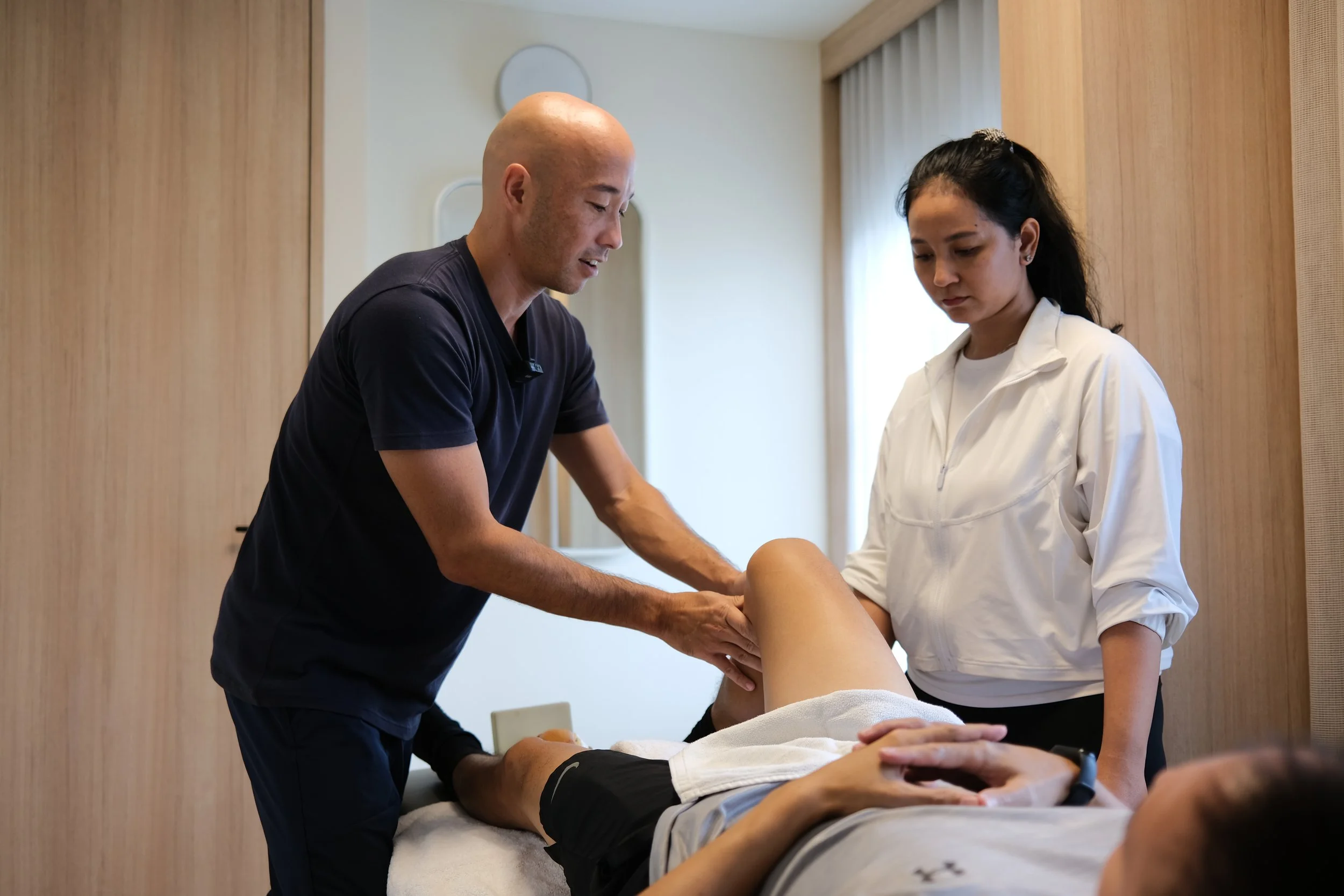
The weeks and months after an operation are when the real work begins – and the quality of your rehabilitation directly determines your long-term outcome. At Akeso, post-operative rehabilitation is one of our core specialisms. Our founder Brett Money trained as a Physiotherapist in the Orthopaedic wing of Rumah Sakit Pondok Indah, and our team maintains close working relationships with Jakarta and Singapore’s leading orthopaedic and sports medicine surgeons.
We work within your surgeon's protocol. We communicate. And we do not rush.
-
A torn ACL is one of the most significant sports injuries a person can face – and the surgery is only half the battle. We guide you through a structured 9–12 month programme, from early swelling control and muscle reactivation through to sport-specific loading and objective return-to-play testing.
-
Joint replacement restores the hardware; physiotherapy restores the confidence to use it. We begin as soon as your surgeon clears you – often within days of the procedure – prioritising mobility, strength, and the functional independence you had before the pain started.
-
The shoulder is a joint that relies on muscle control more than any other – which makes post-surgical rehabilitation critical to a full outcome. We systematically rebuild rotator cuff strength, scapular stability, and overhead range of motion, working within your surgeon's protocol at every stage.
-
Spinal surgery relieves the compression; rehabilitation rebuilds the foundation that protects the spine long-term. We focus on restoring pain-free movement, reactivating the deep stabilising muscles, and progressively loading the spine so you leave recovery stronger than you went in.
-
Whatever the procedure, the principles are the same: understand where you are now, build a structured plan, and progress you safely toward the life you want to return to. We coordinate with your surgical team and adapt the programme as your recovery unfolds.
How we treat it

Assessment first
Every post-op patient starts with a consultation with one of our Clinic Directors – a thorough review of your surgical notes, your current state, and your goals. We establish where you are, not where the protocol says you should be.
Manual Therapy
Scar tissue management, joint mobilisation, and targeted soft tissue work to restore movement quality and reduce compensatory patterns from guarding the operated area.

Progressive Loading
We rebuild muscle and tendon capacity in measured stages – starting with activation, progressing through controlled movement, and building to full functional load. We use objective criteria, not just how you feel, to decide when to progress.

Return-to-life Planning
Whether your goal is walking comfortably, returning to sport, or getting back to work, we define it clearly and build your programme around it.
| Phase | Goal | Typical focus |
|---|---|---|
| Early (Weeks 1-4) | Pain and swelling control, basic mobility | Manual therapy, gentle activation, movement coaching |
| Mid (Weeks 4-12) | Strength, range of motion, function | Progressive loading, joint mobilisation, daily activity rehab |
| Late (3–12 months) | Full return to activity or sport | Functional complexity, sport-specific training, discharge criteria |
Timelines vary significantly by surgery type. Your Clinic Director will give you a realistic projection at your first session.