
Lifestyle, Posture & Spine Health
Long hours at a desk, back-to-back meetings, and hours in Jakarta traffic – the city's lifestyle is one of the leading drivers of back pain, neck pain, and postural breakdown.
What we treat
-
Lower back pain is a symptom, not a diagnosis – and treating it properly means finding the issue behind it, not just managing the discomfort. Whether it originates from a disc, a joint, a muscle imbalance, or a postural pattern, we identify the cause and build a treatment plan that resolves it rather than suppresses it.
-
A herniated disc can cause significant pain, but surgery is far less often necessary than patients are told. We reduce nerve irritation through targeted joint mobilisation and manual therapy, decompress the surrounding structures, and rebuild the core stability that protects the disc long-term.
-
The shooting pain, numbness, or tingling that runs from the lower back into the leg is one of the most debilitating – and most mismanaged – conditions we treat. Accurate diagnosis of whether it originates from the lumbar spine, the piriformis, or another structure is critical, and it is where our Clinic Directors' diagnostic skill makes the biggest difference.
-
Most chronic neck pain and many persistent headaches trace back to restricted cervical joints and chronically overloaded upper trapezius muscles – a pattern driven almost entirely by how we work and how we hold our phones. We address both the joint restriction and the muscular imbalance, and teach you the habits that stop it coming back.
-
Poor posture is not a discipline problem – it is a structural one, built up over years of sitting, screen time, and one-sided loading. We identify your specific pattern, release the muscles that are short and overactive, reactivate what has switched off, and retrain movement so better posture becomes your default, not your effort.
-
Physiotherapy cannot reverse a structural curve, and we will always be honest about that – but it can significantly reduce pain, slow progression in adolescents who are still growing, and improve the visible asymmetry that the muscular component of scoliosis creates. We offer a realistic, clinically grounded programme for both adolescents and adults.
-
Long-standing musculoskeletal pain that has not responded to previous treatment is often not a tissue problem – it is a movement problem, a loading problem, or a pattern that has been treated at the symptom level rather than the source. We start fresh, reassess without assumptions, and build a plan around what we actually find.
At Akeso, back and neck pain related to lifestyle and posture is something we treat on a daily basis. We have seen thousands of patients with these issues and we know how to read them – quickly and accurately. We know the spots, we know we can fix them. We will find the underlying cause, rather than treating the symptom and sending you on your way.
Most of these conditions are highly manageable. They just need to be approached correctly from the start.
How we treat it

Root Cause Diagnosis
Back pain is a symptom, not a diagnosis. We identify the structure, the loading pattern, and the contributing factors – whether that is disc pathology, joint restriction, muscle imbalance, or posture. The treatment follows the diagnosis.

Precision Manual Therapy
Precise, hands-on release of the tight structures maintaining the problem – specific to the vertebral level, the muscle, the fascial line. Patients with chronic back pain often describe the first proper manual therapy session as transformative.

Movement Retraining
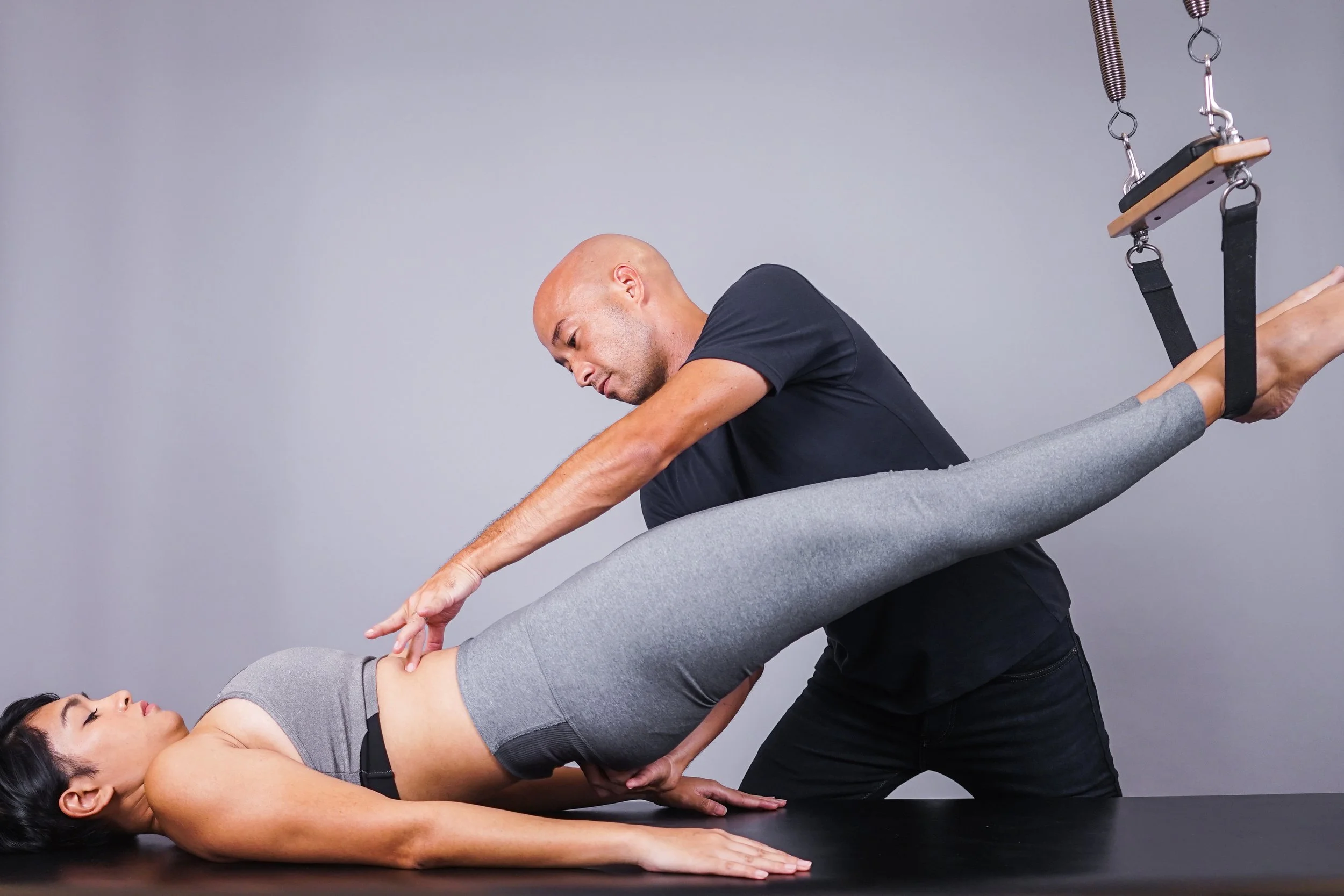
We teach the body to move without the compensatory patterns that sustain pain. This is where Clinical Pilates and corrective exercise are woven into treatment – not as a generic add-on, but as part of a specific programme for your specific pattern.

Lifestyle Integration
Desk setup, sleep position, sitting habits, load management – practical, specific adjustments that compound the clinical work and prevent the problem from returning.
Common Presentations
| Condition | Typical cause | Treatment focus |
|---|---|---|
| Lower back pain | Disc, joint, or muscle overload | Manual therapy, core activation, movement retraining |
| Sciatica | Nerve irritation from L4–S1 | Neural mobility, joint mobilisation, targeted release |
| Neck pain / headaches | Cervical joint restriction, upper trap overload | Joint mobilisation, deep neck flexor reactivation |
| Postural pain | Chronic muscle imbalance from desk work | Release tight muscles, retrain weak ones |
| Scoliosis | Structural curve with functional overlay | Corrective exercise, asymmetric manual therapy |