
Knee Pain from Padel - Why it Happens and How We Fix It
Akeso Physio Clinics – 8th April 2026, Jakarta, Indonesia
If your knees have started complaining every time you step on a padel court, you are not alone. We are seeing more padel-related knee injuries in our clinics than ever before, driven by Jakarta's explosion in the sport over the last few years. The good news: it is highly treatable, and you do not have to stop playing permanently.
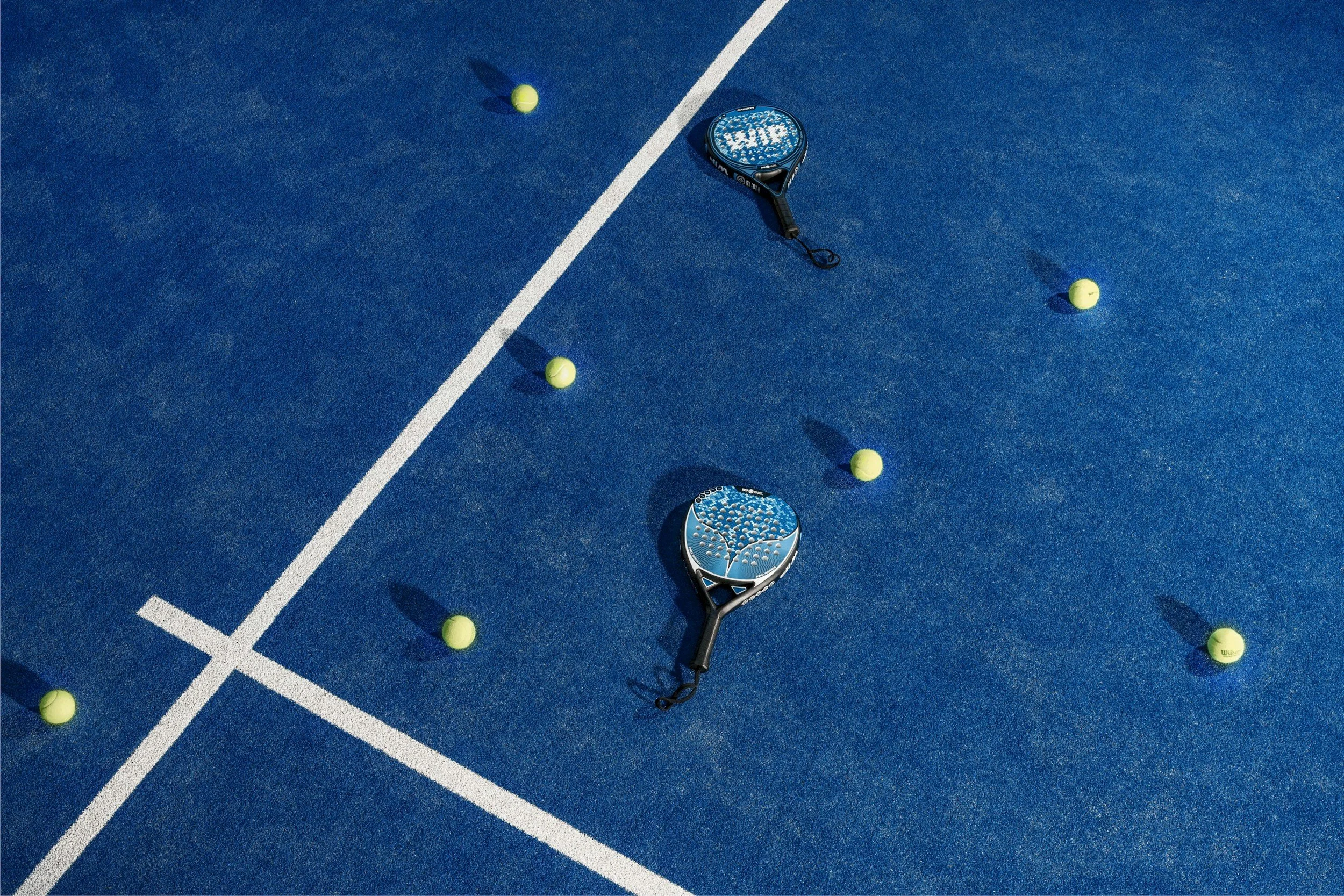
Eri's story - does this sound familiar?
Eri is a businessman in his mid-40s. He plays padel three to four times a week and has done for years. He is fit, competitive, and padel has become a non-negotiable part of his week, both socially and physically.
Then the knee pain started.
Not a dramatic injury. No single moment where something went pop. Just a gradual build-up of pain at the front of the knee that got harder and harder to ignore. Pain when he was playing. A grinding, clicking sensation during movement. And that specific stiffness when he had to get out of the car after a long drive, bending the knee to step out and feeling it seize up.
He tried resting. It got a bit better. He went back to playing. It came back.
Sound familiar? This pattern — of pain that improves with rest but returns the moment you load up again — is one of the most telling signs of what Eri actually had.
What was actually going on in Eri's knee
When Eri came in for his first consultation at Akeso, our Clinic Director sat down and listened carefully before touching anything. That detail matters. A lot of people come to us having already been told "it's your knee" (as if that explains anything).
The full assessment told a different story.
The pain was at the front of the knee, yes. But it was not coming from the knee joint itself - not the ACL, not the MCL, not the meniscus. The source was the patellar tendon: the thick band of tissue that runs from the bottom of the kneecap to the top of the shin, and which acts as the transmission belt every time your quads fire.
The diagnosis was patellar tendinopathy - an umbrella term that covers a spectrum of tendon stress, from acute inflammation (tendinitis) to deeper tissue degeneration (tendinosis). In Eri's case, years of loading the tendon through padel, combined with the particular lateral and explosive demands of the sport, had accumulated into a tendon that was struggling to keep up with the workload he was putting through it.
The clicking and grinding? The crepitus you feel under the kneecap is the joint surface and surrounding structures moving through restricted, inflamed tissue. The stiffness getting out of the car? Classic tendinopathy behaviour - the tendon seizes up during sustained loading at a fixed angle and needs time to "warm up."
None of this required surgery. None of it required Eri to retire from padel. But it did require a proper plan.
How we treated it – phase by phase
One of the things we are most clear about with patients is this: we do not have a script. We have a framework, a deep well of clinical experience, and we problem-solve with you – not on you. Eri's treatment looked roughly like this, but every case gets adapted as we go.
Phase 1 – Get out of pain
Before we could do anything else, we needed to calm the tendon down.
This is where Akeso's manual therapy approach makes a real difference. Our therapists train for years to develop what we call anatomical precision – the ability to locate exactly which structures are inflamed, which muscles are compensating, and how to work into each one with the right depth, direction, and pressure. It is not massage for the sake of feeling good. It is targeted tissue work aimed at breaking down scar tissue, reducing the load on the tendon, and stimulating the healing response.
In Eri's case, Phase 1 involved:
Manual therapy: soft tissue work targeting the quads, the patellar tendon insertion, and the surrounding structures
Joint mobilisation: restoring normal movement at the knee and hip to reduce compensatory loading on the tendon
Ultrasound therapy: to promote tissue healing deep in the tendon
Ice and load management: reducing acute inflammation and advising Eri on how to modify his activity without stopping entirely
We were also honest with Eri about one thing: tendons do not heal quickly. The tissue is dense and relatively low in blood supply. Getting out of pain is the beginning — not the destination.
Phase 2 – Rebuild from the inside out
Once the acute pain settled, we moved into the part of rehabilitation that most people skip – and most injuries come from.
At Akeso, we follow a structured movement progression from our Academy framework. It sounds simple when you describe it, but the precision of execution is everything.
Step 1: Awareness and activation
Before we ask a tendon to work, we make sure the patient actually knows how to control the structures around it. This sounds obvious. It is not.
We start at the most fundamental level: this is your kneecap. This is your shin. This is your quad muscle. Now squeeze the quad and feel the kneecap move. Most patients who come in with chronic knee pain have partially switched off the quads — the body's way of protecting a painful area. Until you can deliberately fire that muscle, you cannot safely load it.
Step 2: Dissociation and articulation
Once Eri could activate the quads reliably, we introduced controlled joint movement in isolation — holding the shin stable while moving the femur (thigh bone), separating movement at the hip from movement at the knee. This builds the neuromuscular awareness that protects the tendon during dynamic activity.
Step 3: Congruent, pain-free movement
Here we build fluidity. The goal is smooth, controlled movement through the full range of the knee joint — no hitching, no guarding, no compensatory patterns. Eri needed to trust his knee again before we could ask it to perform.
Step 4: Load progression
This is where most traditional rehab either rushes or avoids. The tendon needs load to heal — but the load has to be introduced intelligently.
We started with isometric holds (muscle on, no movement), then progressed to controlled eccentric and concentric loading with resistance. We teach patients the concept of tendon capacity: your tendon has a limit of how much load it can absorb before it becomes irritated. Right now that limit is low. Our job is to raise it — gradually, measurably, sustainably.
Step 5: Functional complexity
The final phase before return to sport. Eri does not just need a healthy tendon in a clinic — he needs it to hold up on a padel court with lateral cuts, drop shots, and two hours of explosive movement.
We progressed to single-leg loading, rotational exercises, and sport-specific patterns: standing by a wall, hitting a ball, loading the knee from the right side, rotating to play left. We replicate the demands of padel and verify that the tendon can tolerate them before clearing him to return.
Phase 3 – Return to play and injury management
When Eri returned to padel, we were upfront: the tendon will flare up. That is not failure – that is normal. Tendons that have been through a period of overload take time to fully adapt to sport-specific demands. The goal in this phase is not zero symptoms; it is manageable symptoms that resolve quickly and trend toward zero over time.
Eri's first few sessions back, he felt it after about 90 minutes of play. Then after two hours. Then only the next day, mildly. Each week, his threshold moved up.
During this phase we continued with periodic manual therapy sessions – not because he was broken, but because active padel players accumulate micro-tears and tightness faster than rest alone can resolve. Regular maintenance treatment kept the tendon from tipping back into the painful cycle.
This is the part of physiotherapy that most clinics do not explain well: return to sport is not the end of the process. It is the beginning of a new phase where you and your physiotherapist work together to build the tendon's long-term capacity. Think of it like a car service – you do not wait for the engine to fail.

★★★★★
“The manual therapy was on another level – I have had physio before, but nothing like this. I still come in for maintenance sessions because I can feel the difference.”
— Eri, 46, Jakarta
The bigger picture – why padel players are particularly vulnerable
Padel demands explosive lateral movement, repeated deep knee bends at the net, and rapid deceleration — all in a relatively compact court where the margin for error is small. Players who come from tennis or other racquet sports often underestimate the loading difference.
The population we see most frequently: men and women in their 40s and 50s who are playing 3–5 times per week, often with little structured strength work to support the volume. The tendon builds up a debt it cannot service, and eventually it speaks up.
The fix is not to play less (though load management matters). The fix is to build a body that can sustain the sport you love.
Think this sounds like your knee?
Book a consultation with one of our Clinic Directors. The first session is a full assessment – we will find out exactly what is going on, explain it clearly, and give you a Care Plan for what comes next.
You do not need a doctor's referral. Most major insurance is accepted.
Clinics in Pondok Indah, Gunawarman, and Menteng.